Designing Celebration Moments & Search 2.0 for Scalable Discovery
Product design & strategy
.
Responsive Web
.
2025
My role
As the founder of Wall of Portfolios, I owned the full product lifecycle — from identifying growth gaps to defining strategy, designing the experience, and shipping it end-to-end.
Context — About Wall of Portfolios
Wall of Portfolios is a curated platform where designers showcase high-quality, structured portfolios and recruiters discover top design talent.
At the time of this project, the platform had ~5K registered users, ~20K monthly visitors, and 1,000+ featured portfolios across companies like Google, Swiggy, CRED, and Razorpay.
Problem statement
Wall of Portfolios had strong curation value but weak growth mechanics. The platform was growing linearly, not compounding. Two data signals made this impossible to ignore.
⚠️
Signal 1 - The growth loop existed in behaviour. Not in the product.
When designers got featured, they posted on LinkedIn and Twitter — because it felt earned.
But the platform had no shareable asset, no celebration moment. The pride existed. The product didn't capture it.
🔍
Signal 2 - Search was designed for identity. Users were expressing intent.
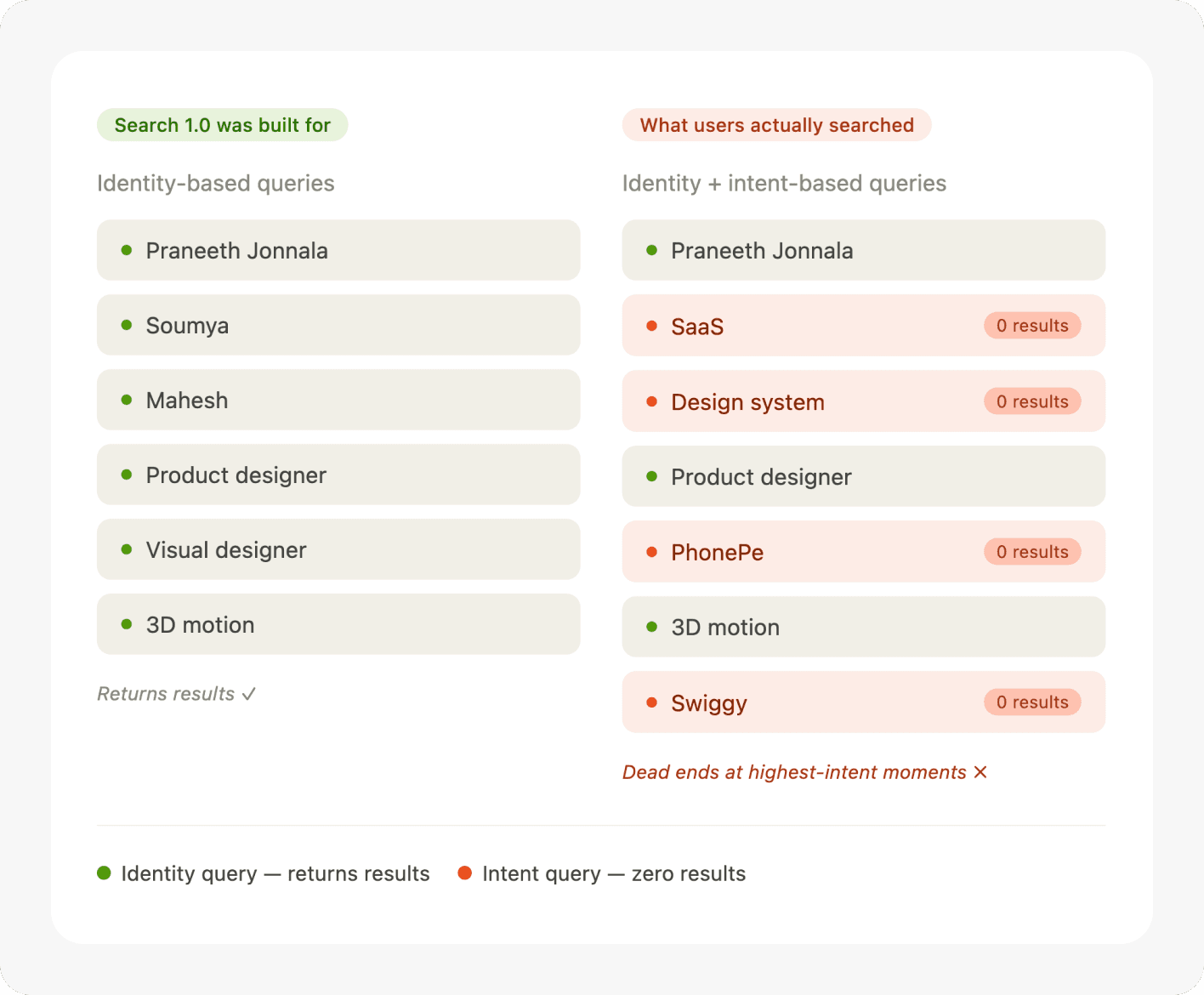
Search 1.0 was built for names. But query logs showed users searching for companies and skills like Rive, SaaS, motion.
These queries returned zero results. Dead ends at the highest-intent moments.
Both signals pointed to the same gap — the product wasn't meeting users at their highest-motivation moments.
Why These Two Problems, Why Now
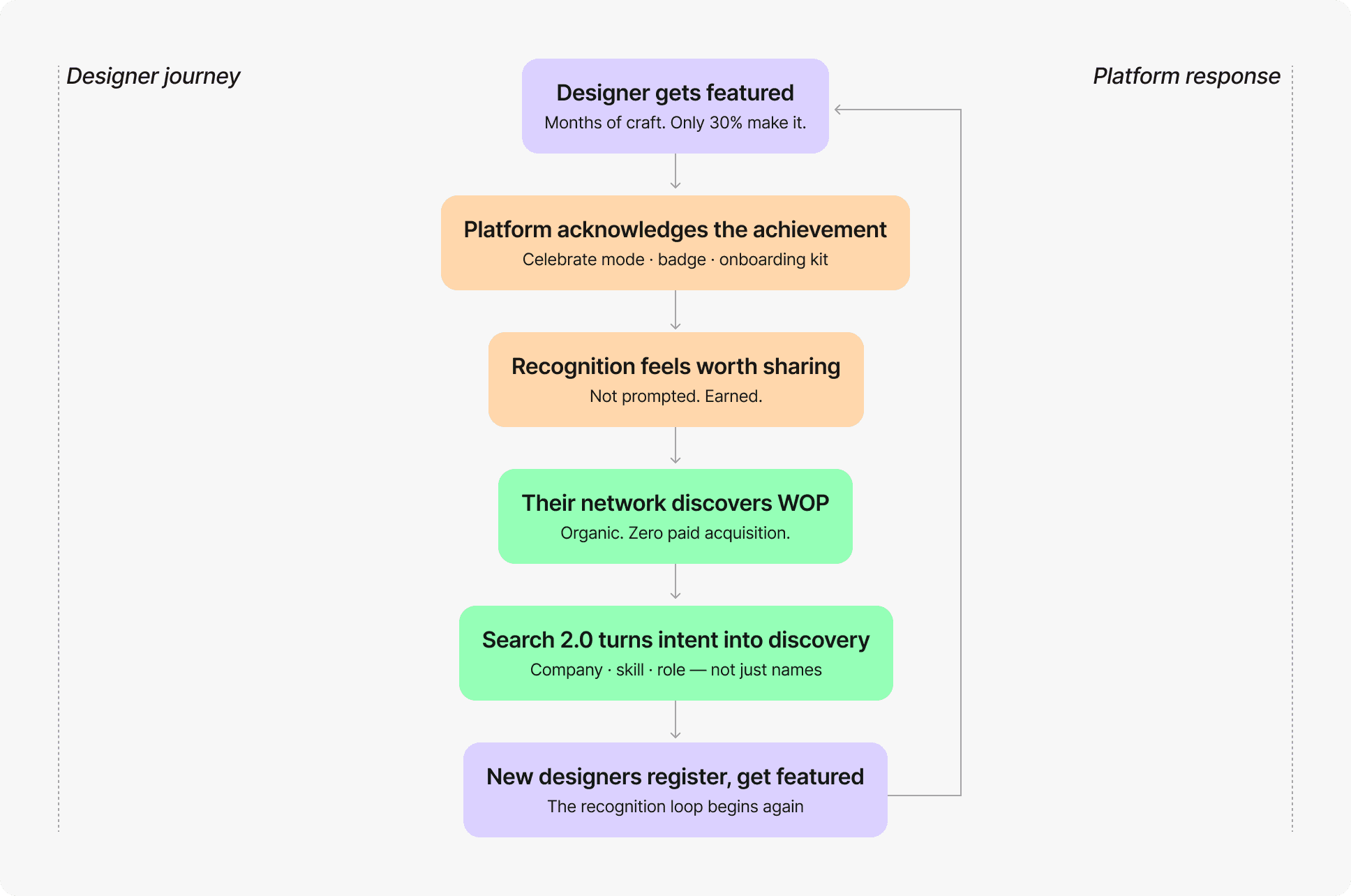
One intervention drove acquisition. The other drove depth. Together they created a compounding loop.
Approach to Solving the Problem
Based on the two core problems, I defined four design principles to guide both workstreams:
🎉
Reinforce achievements
Reinforce achievements through meaningful recognition
🔍
Contextual Discovery
Enable discovery through company, skills, and context
⚙️
Reduce effort
Reduce effort by structuring, not adding, discovery paths
🚀
Product-Led Growth
Drive growth through product-led moments
Part 1 - Reinforcing Achievement Through Recognition - The Celebrate mode
The Insight
Portfolio creation takes months of effort. Getting featured on WOP should feel like a milestone — but the product gave designers no moment of recognition. No visual payoff. Nothing worth sharing.
The behaviour was already there. Designers were posting on LinkedIn and Twitter voluntarily. The design opportunity wasn't to create new behaviour — it was to amplify what was already happening.
The Design
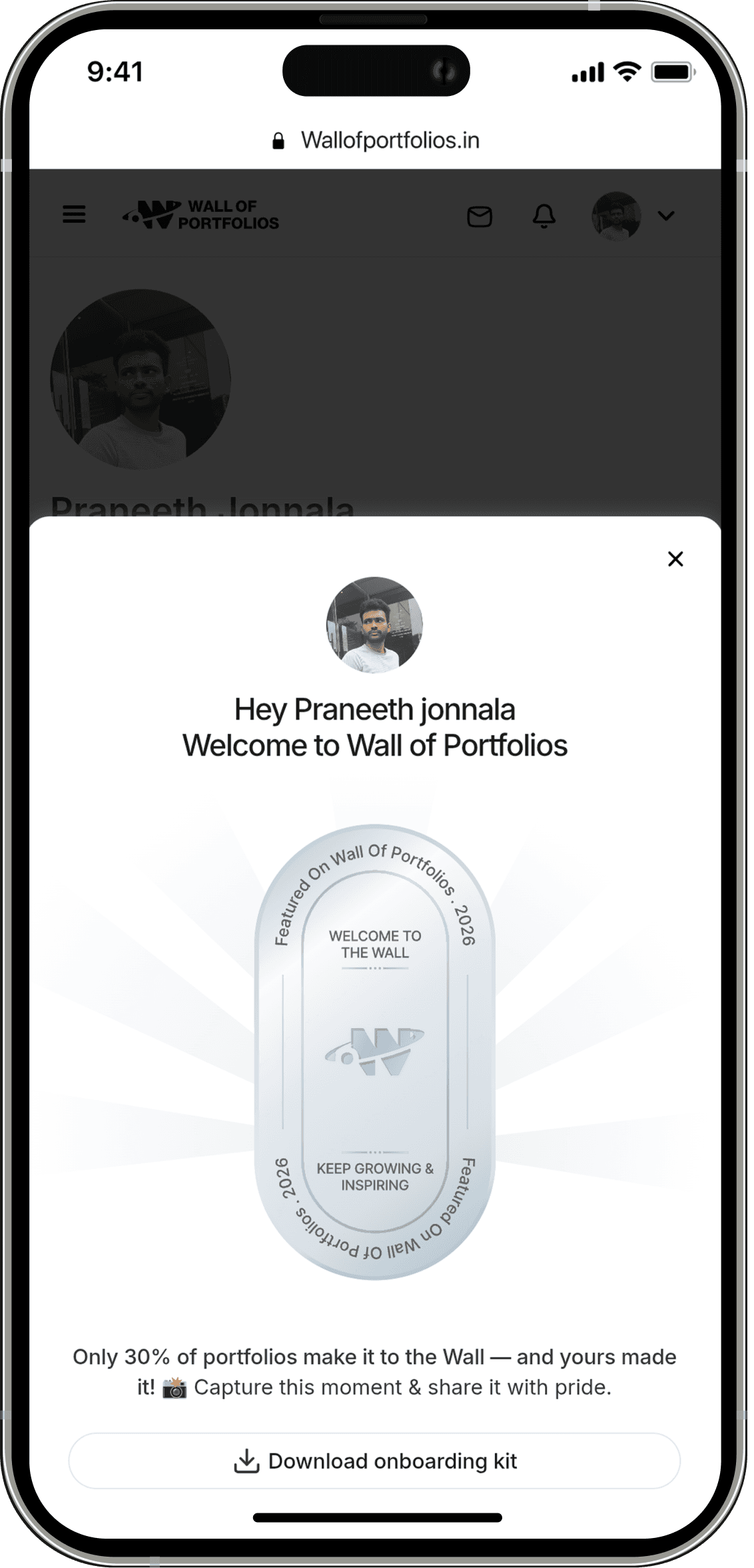
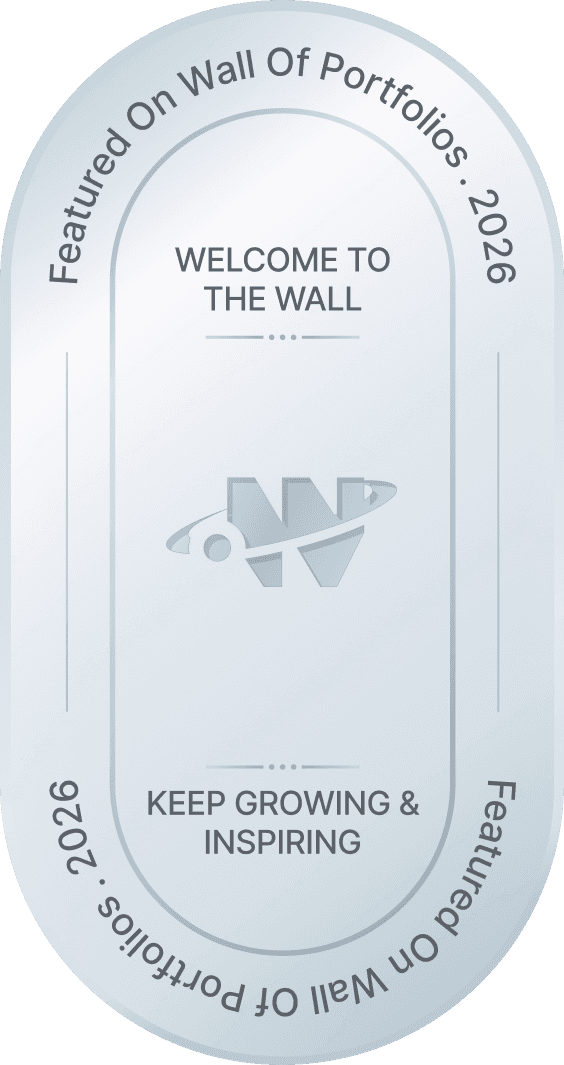
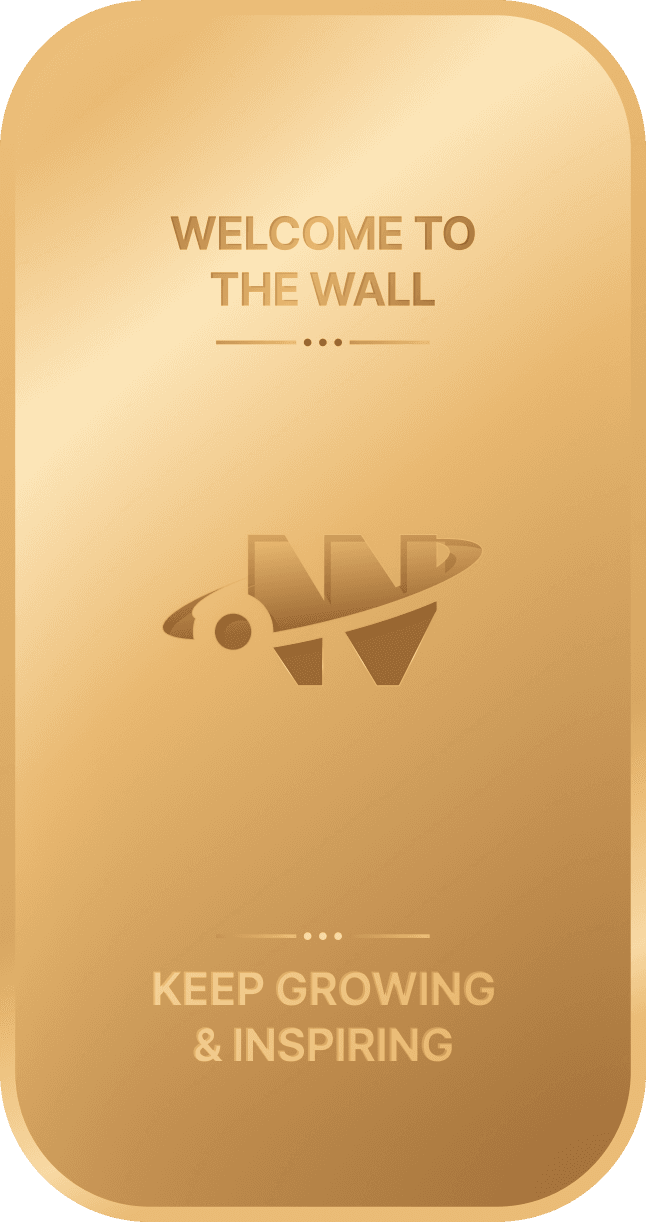
I designed a Celebrate Mode — a personalised achievement moment triggered when a designer is featured on the Wall for the first time.
Alongside the emblem, designers receive a downloadable onboarding kit with shareable assets — designed to move seamlessly from WOP to LinkedIn, Twitter, and Instagram without any extra effort from the designer.
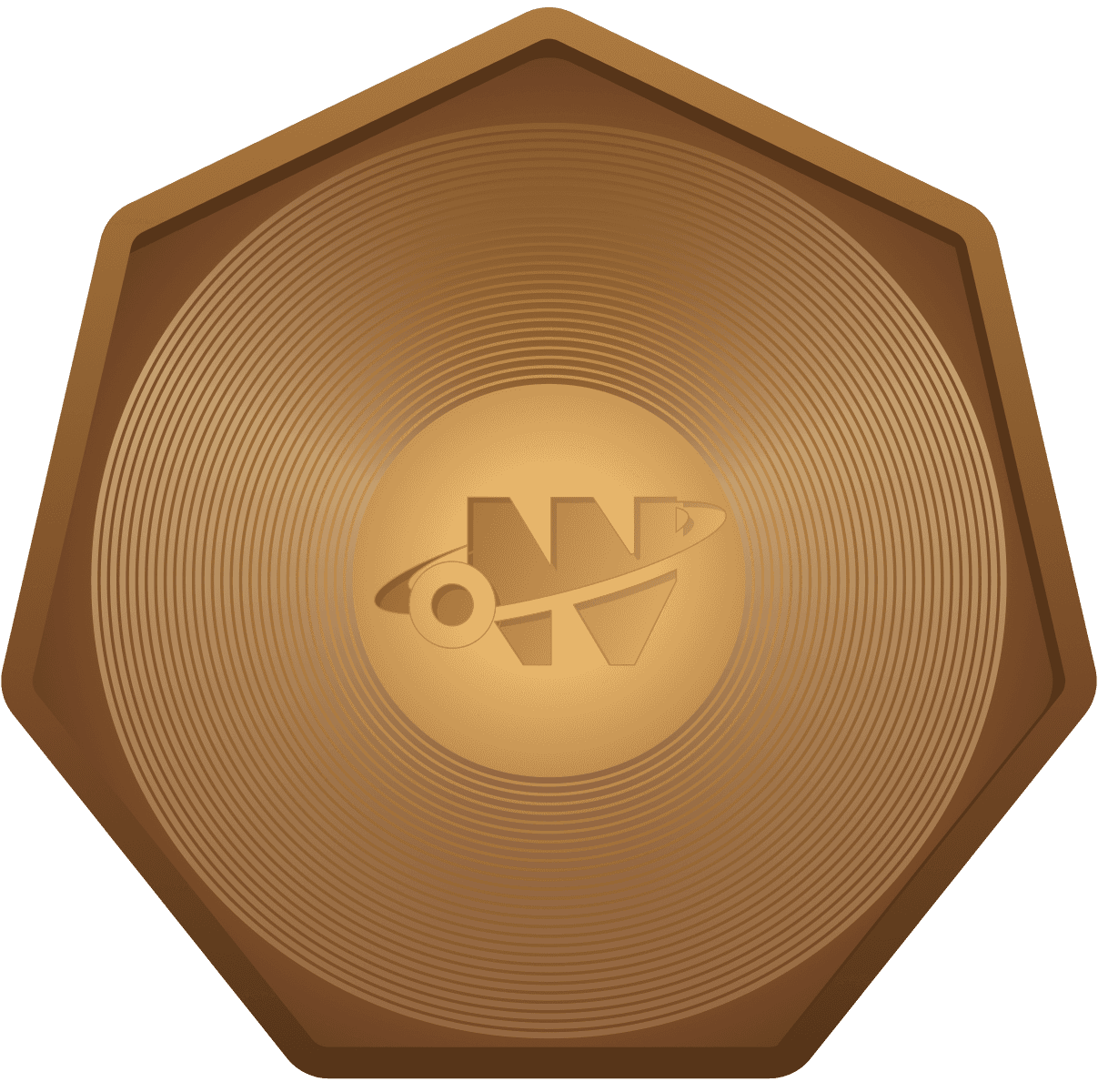
Other Visual iterations

Key Design Decisions
Made achievement feel earned by highlighting “Only 30% get featured”, reinforcing rarity and perceived value
Designed for natural sharing by framing it as “capture this moment” and offering a downloadable onboarding kit with shareable assets
Part 2 — Enabling Intent-Based Discovery: Search 2.0
The Problem With Search 1.0
Search 1.0 was built for two query types: designer name and role. As the catalogue grew past 1,000 portfolios, this became a hard ceiling.
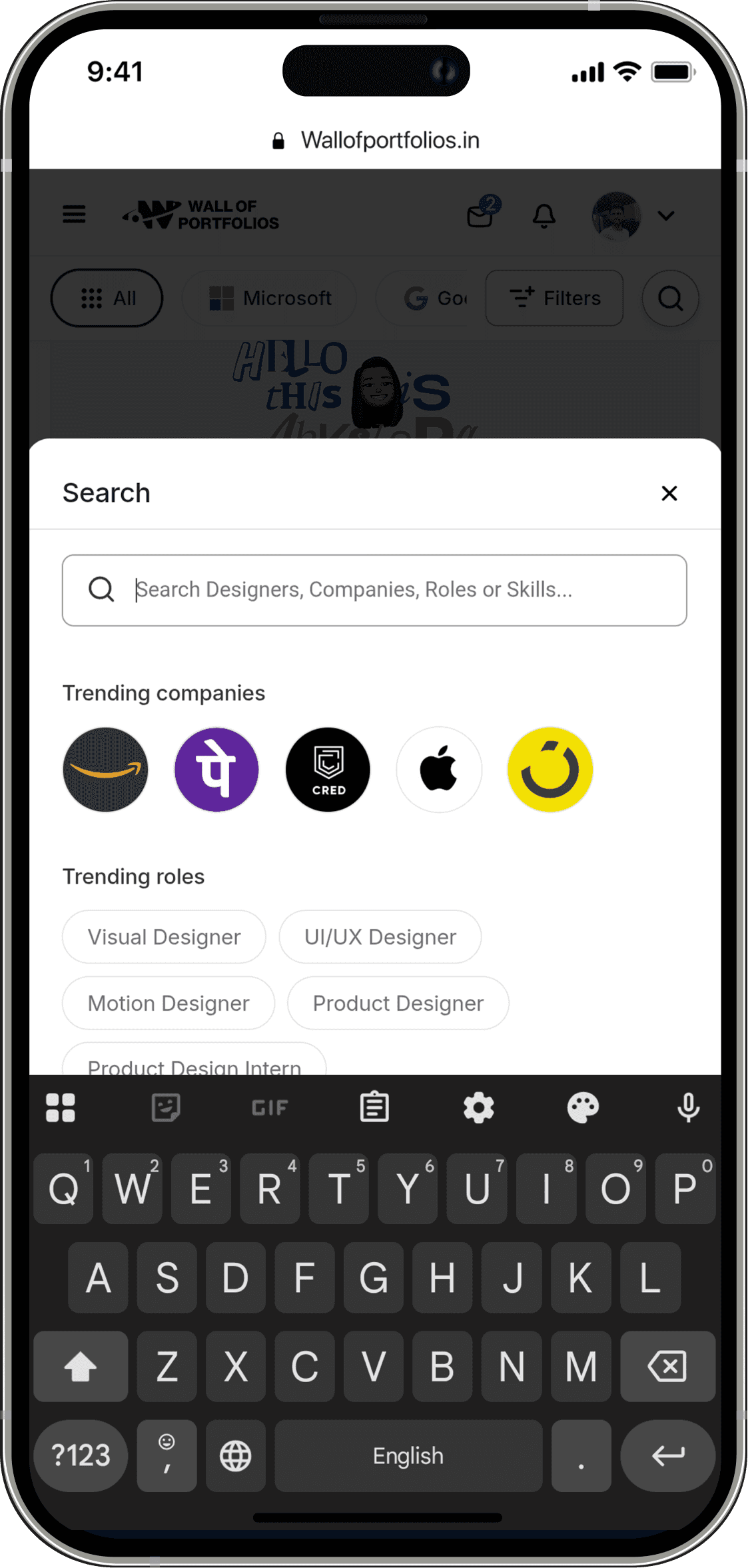
Query log analysis told a different story. Users were searching for companies like Swiggy, PhonePe, and CRED — and skills like SaaS, design systems, and motion. These intent-based queries returned zero results, creating dead ends at the platform's highest-intent moments.
The Data Signal That Shaped the Direction
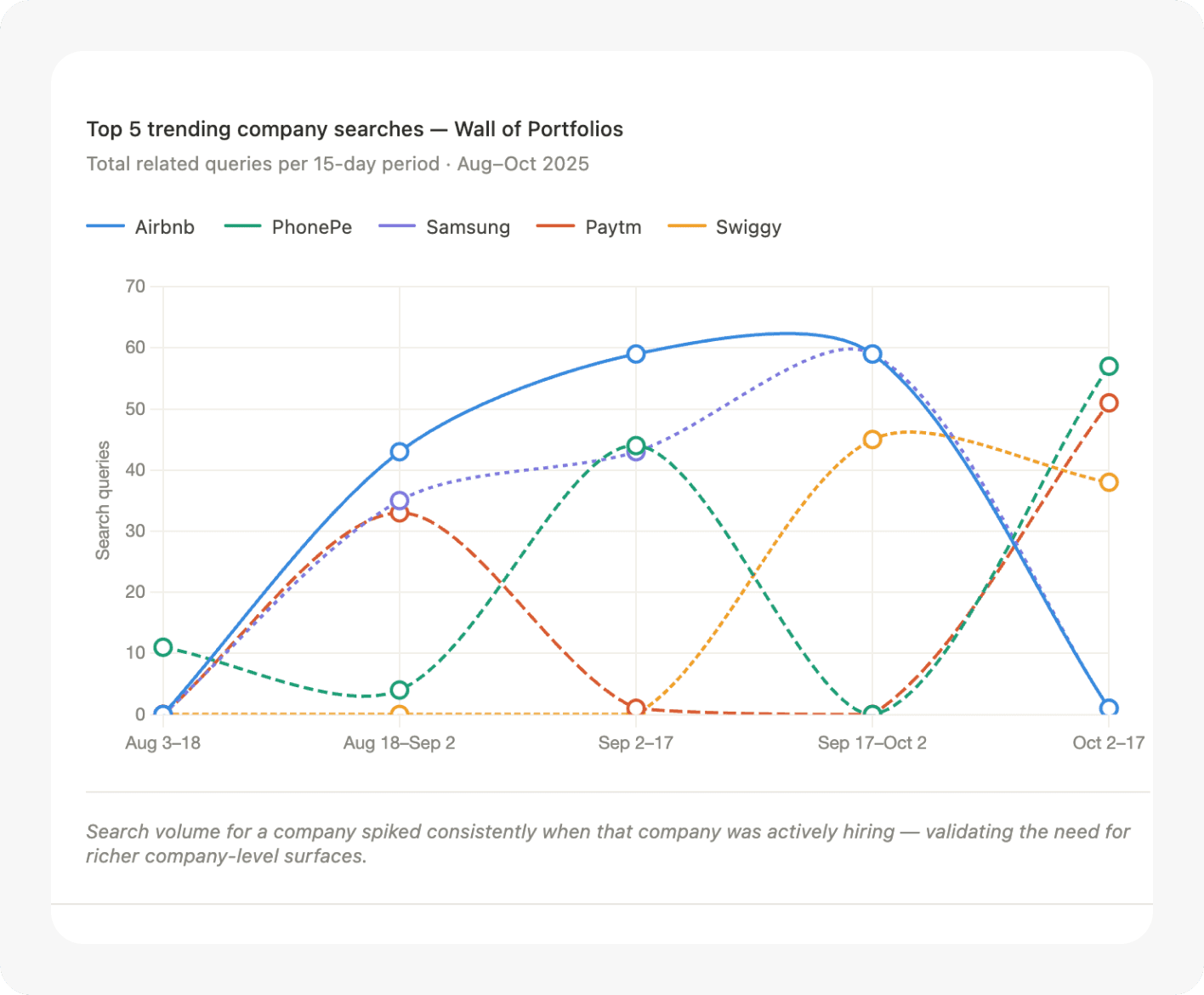
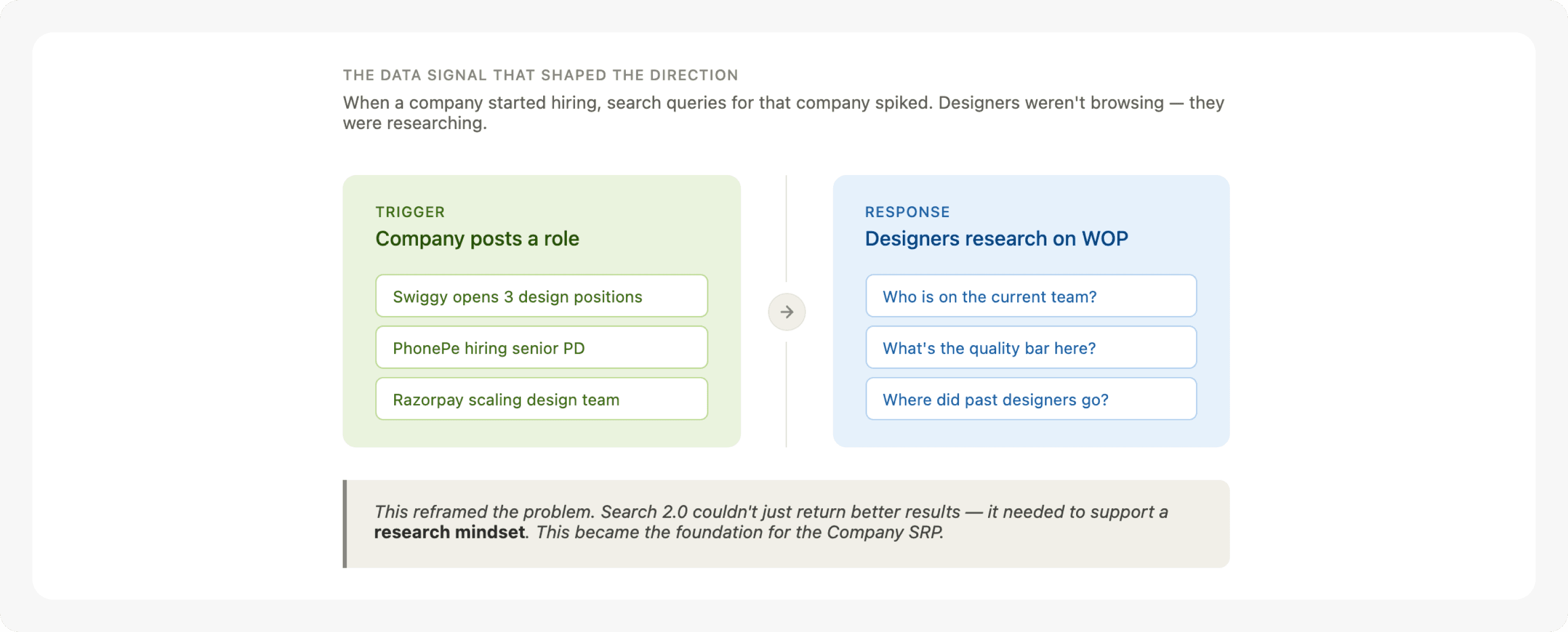
Search query logs revealed a second pattern: when a company was actively hiring, searches for that company on WOP spiked significantly.
The Design Shift - Search 2.0
The search understood who you were looking for. It didn't understand what you were trying to find.
Before designing, I benchmarked Mobbin, LinkedIn, and Behance. The pattern was consistent — effective search surfaces context alongside identity, not after it.
Search 2.0 was rebuilt on this principle. The new model understands four dimensions simultaneously: company, skill, design style, and role — all in one unified surface.
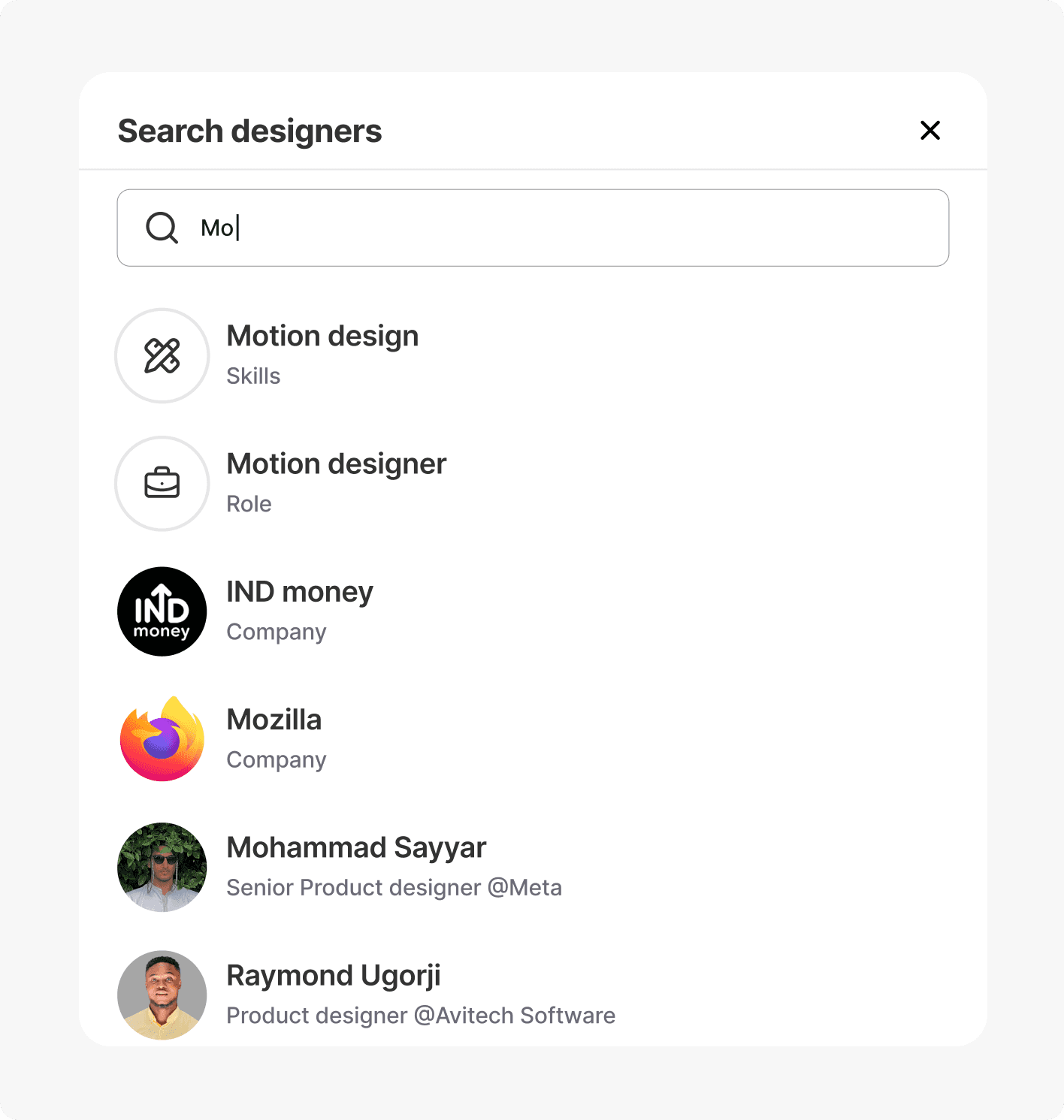
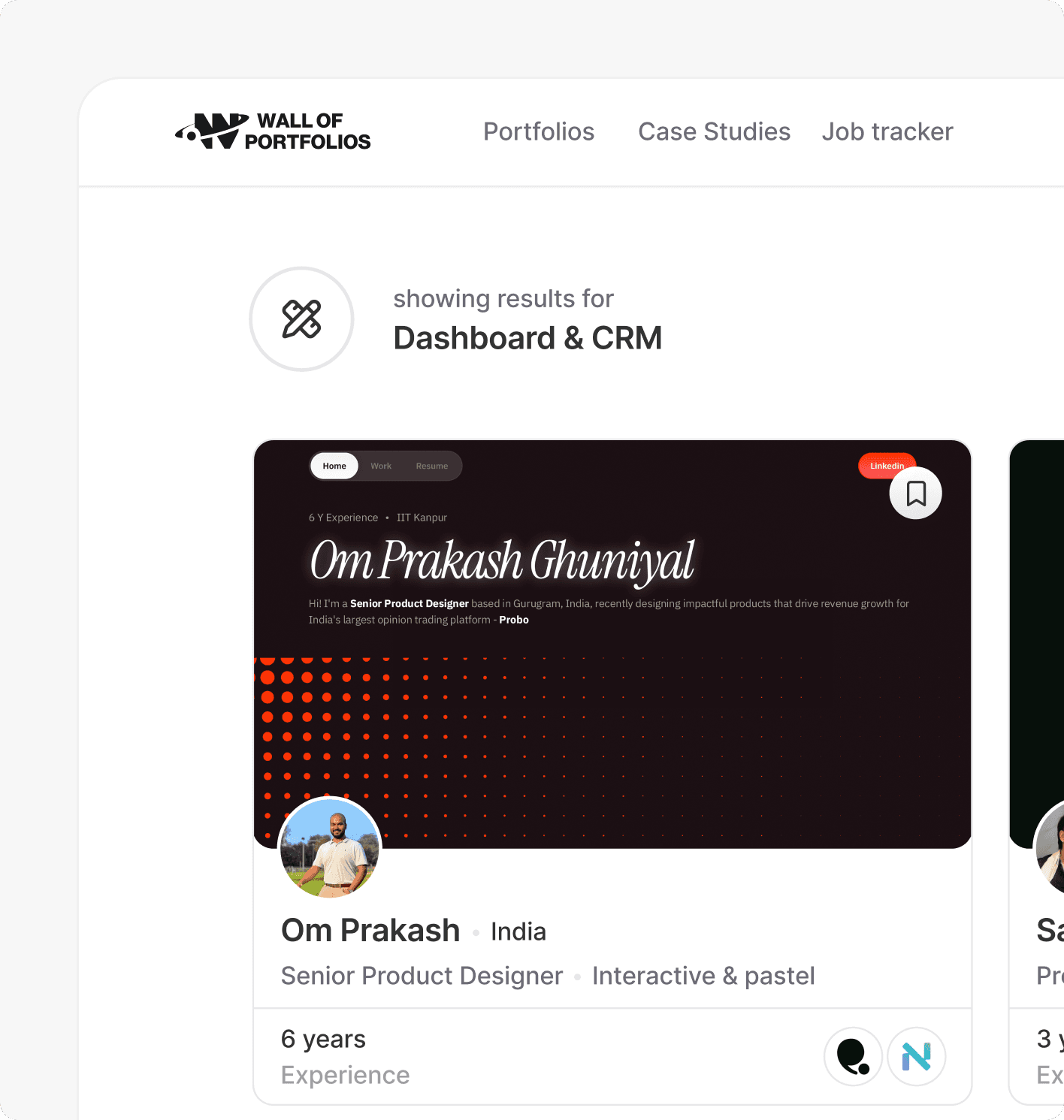
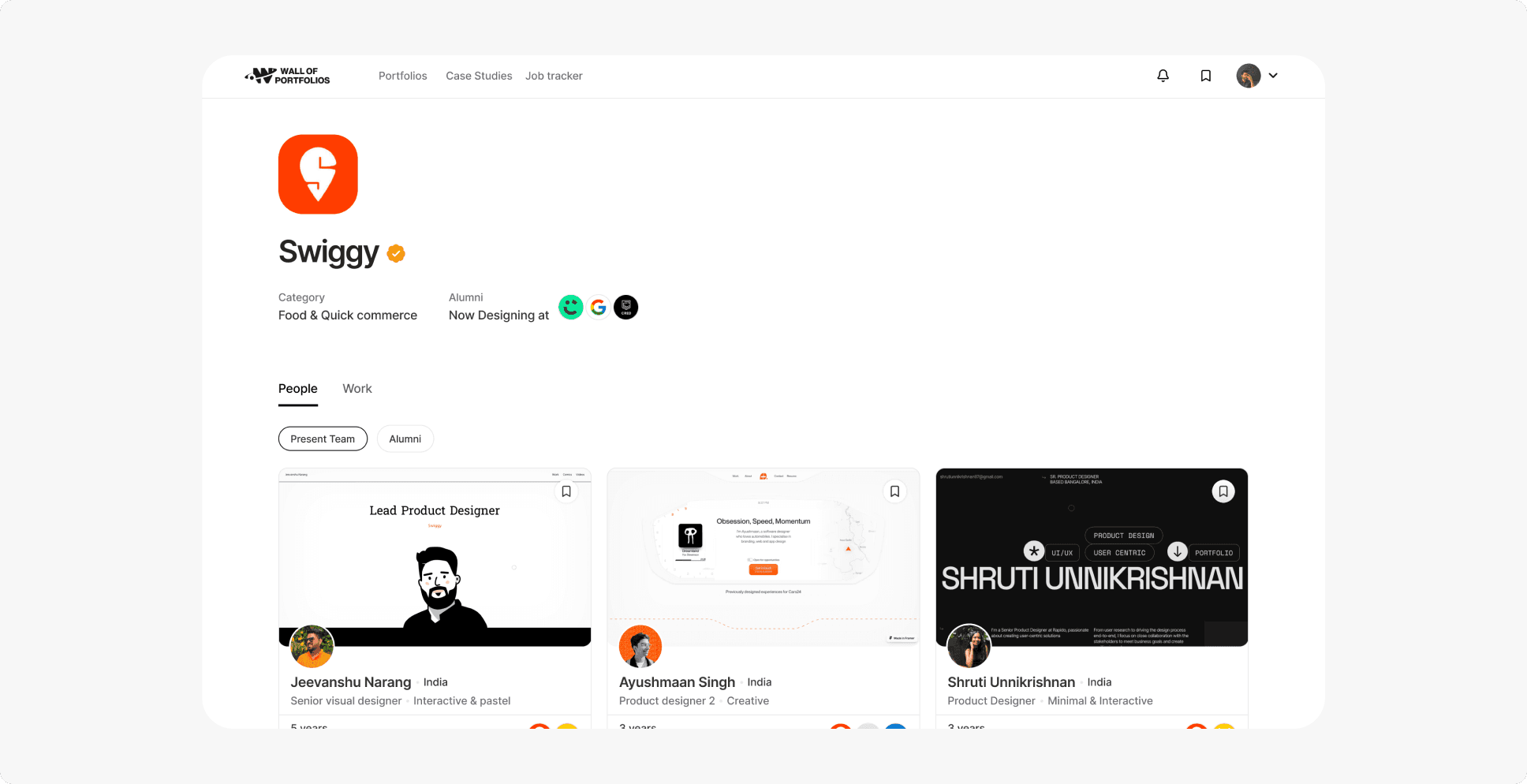
Company SRP Design
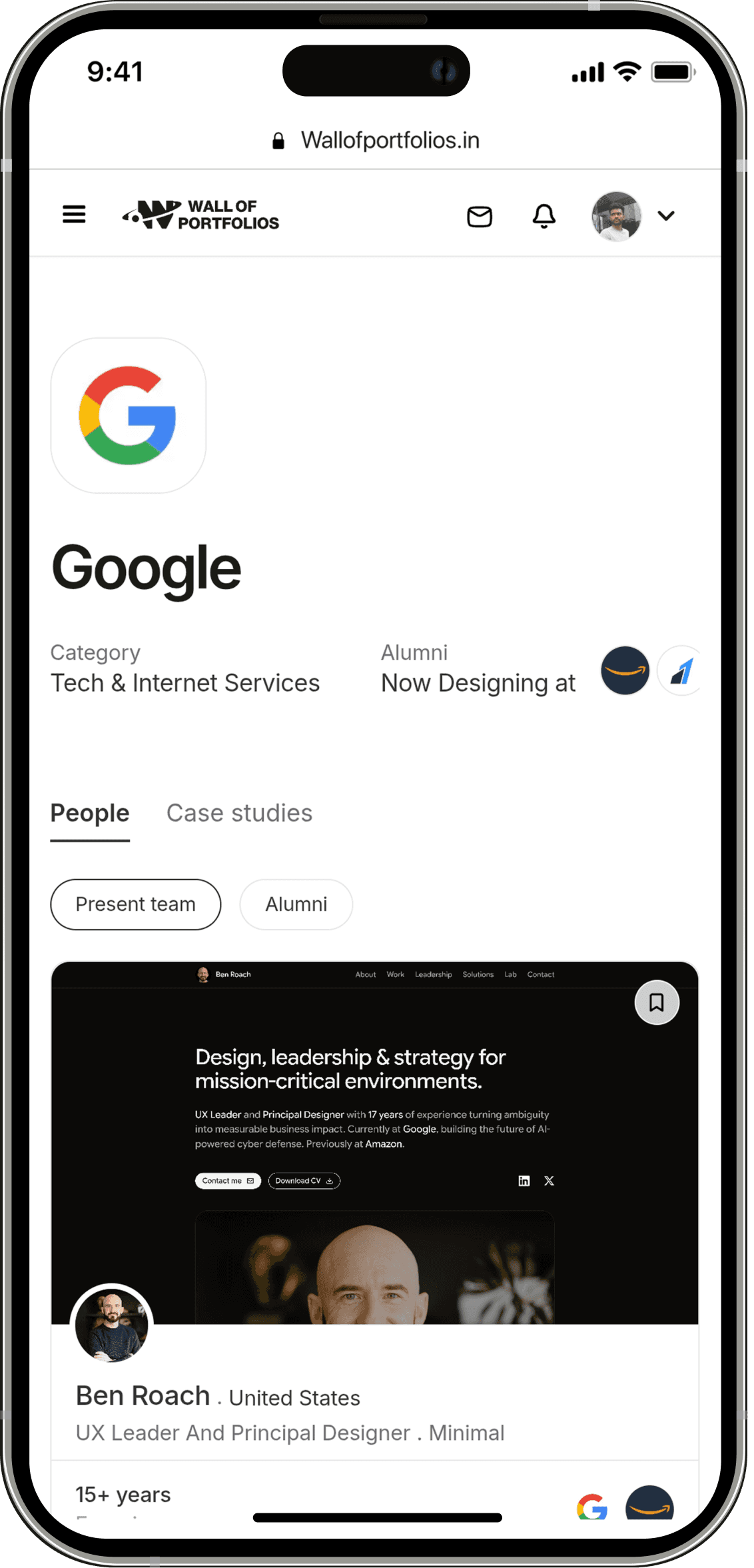
Designed for the research mindset: who's on the team, what's the quality bar, where did alumni go next. Each SRP surfaces present team and alumni together — useful for job-seeking designers and recruiters alike.
Every company page also became an SEO-indexed surface. Users searching "Swiggy product designers" on Google now land directly on WOP — intent-matched traffic with zero paid spend.
Key Design Decisions
Made intent a first-class search entity
Designed Company SRPs as research tools, not result pages
Surfaced alumni to communicate quality bar
Turned every company page into an SEO entry point
Impact
Both interventions shipped together and moved the platform from linear to compounding growth.
Celebrate mode drove natural sharing — 1 in 4 featured designers downloaded the onboarding kit, creating peer-driven organic growth loops.
Company pages created new high-intent entry points via search queries
Registered users grew by ~300%+ in 4 months, driven by product-led organic acquisition
Monthly traffic increased by ~70%+ in 4 months, through SEO and discovery improvements